Mightier Acorns

Journeys through Genealogy and Family History

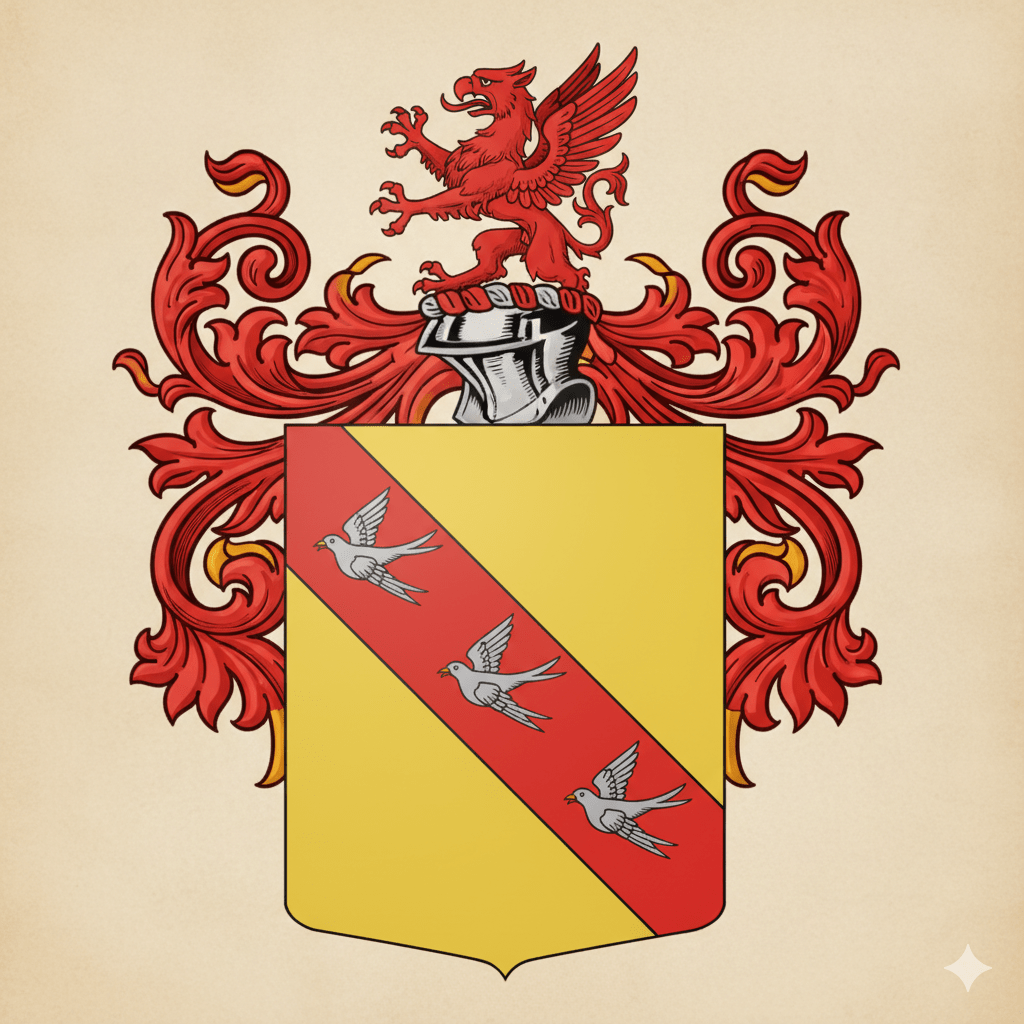
A parody of a family coat of arms designed with acorns as elements, with the motto "ex gladnis potentioribus" Latin for "from Mighty Acorns"
From Mighty Acorns
  • Ahnentafel #17: Bertha May Greenlee (1885-1971)

    Bertha May Greenlee was the only child of an only child, the only surviving descendant of three generations of unrecorded tragedy.

    Bertha was born on 5 December 1885 in Arcadia, Hancock County, Ohio. She was nearly 2 years old when her father, Allen Greenlee, died suddenly. Her mother, the former Alice Hale, remarried in 1889, when Bertha was four, and Bertha was adopted by her stepfather, George McClelland Cramer.

    In 1891, when Bertha was six years old, her father’s grandmother, Eleanor, died at the age of 81. The only remaining relative on her father’s side of the family was a great-aunt, Elizabeth McComb, who also lived in Hancock County. But her mother’s family, the Hales, and her adopted family, the Cramers, made up young Bertha’s world.

    Bertha’s half-sister, Mamie, was born in 1894, and they remained close after they grew up. I have the impression that Bertha was old enough not to feel threatened by the attention given to a new baby, and that she was well-loved and well cared for.

    Love in the Twentieth Century

    On 9 June 1906, 20-year-old Bertha Cramer married John Q. Callin in Fostoria. The Callin family had business interests across central and northern Ohio, and one might think that the sons of Union soldier John H. Callin would have had fine prospects and solid reputations.

    But by 1905, I suspect that some of that reputation had begun to change. John Q’s older brother, Byron Herbert, who had married the daughter of John Muir in 1896, left his first wife behind in Ohio and was teaching in South Dakota. In November 1905, he was involved in a hunting accident that left one side of his face disfigured. The younger girl who gave him first aid and drove him to the doctor later became his second wife1. This wasn’t treated as a scandal by the newspapers, but that wouldn’t stop the gossip among the family or the neighbors.

    John Q., as we mentioned last week, had married a fellow teacher in Dayton in 1901, and we don’t know how or why that marriage ended. Whatever his story was, Bertha must have known something about it, and she decided to marry John anyway.

    I speculate that John H., known as “Colonel Callin” for his respected position in the Grand Army of the Republic in Wood County, had ambitions for his children, and I suspect he maneuvered Herbert into that first marriage to Fannie Muir. If so, John Q. certainly saw how his older brother’s first marriage played out, and marrying an older, divorced woman in 1901 might have been his way of rebelling. We do know that John Q’s sister, Emma, married one of John H.’s business partners, George D. Matcham, in 1907, which seems to support my speculation about John H.’s matchmaking activities.

    Of course, nobody wrote anything down that might confirm or refute these wild guesses on my part. You will have to decide how to explain the facts we see in the records. That these things happened is evident; why they happened is an open question. Speculation aside, however it came about, John and Bertha made a successful 50-year journey together. And that tells me that whatever their circumstances before 1906, they chose each other and were happy with that choice.

    Keeping the Children Close

    From Bertha’s point of view, as an only child, she and John had a large family, but compared to the previous several generations of Callin families, having only three children was a departure. The birthdates of their children were spread out, too: Yvonne in 1907, Norman in 1912, and Bobby in 1920.

    There is no doubt that John and Bertha’s affection for their children ran deep, but circumstances frequently kept them apart. During the 1920s, when Bob was a toddler, John took a job teaching in upstate New York, and while John, Bertha, Norman, and little Bobby lived in Schenevus, NY, Yvonne stayed in Ohio, living with the Cramers.

    Hired about 1921, John left the Schenevus High school district in 1923 for another teaching position a Philmont high school in Columbia County. Bertha was honored by the Baptist church with a “gift of gold” for two years as a contralto soloist in the church choir, and Norman was awarded a scholarship. When they moved, they sold some household goods:

    One oak buffet, 6 oak dining chairs, dining cook stove, with oven; oil heater, Simmons ivory bed (new), Foster Ideal springs (new), dresser, carpets, rugs, 150 Mason’s fruit jars, kitchen chairs, washtubs, boilers, clothes rack, and numerous other household articles, tools, etc. It is especially requested that all goods be removed on day of sale. Terms cash.

    I think having Yvonne live in Ohio was difficult. She was 14 when John and Bertha moved to New York, so she began high school that year, and she seems to have spent a lot of time with Mamie, who was old enough to be an appropriate chaperone but young enough to feel like an older sister. By 1926, though, it was Norman’s turn to start school, and he attended Fostoria High, like his sister. Either the whole family had moved back by that year, or he prevailed on them to let him live with his grandparents, too. Either way, by the time he graduated, the whole Callin family was back in Fostoria.

    Norman was a well-regarded boy and did well in high school. He was the humor editor of the school paper and was apparently a very funny person. Not long after he graduated in 1930, the family moved to Orange County, Florida, and Norman was married there in 1933.

    Funny Papers

    John Q. died in 1956, and Bertha survived him until 1971. I know what I know about them mainly through the scrapbook and letters I inherited from my Grandpa Bob, their youngest son, and from newspaper articles I’ve been able to find on Newspapers.com.

    Norman’s success as a humor editor was apparently not an aberration. This could be a projection on my part, but based on what I read in their correspondence, all of these Callin people were very funny. I know this about myself, my children, my dad, and Grandpa Bob from firsthand experience, so it’s easy to see that same dry wit and jovial attitude coming through the notes John and Bertha sent to Bob.

    Here’s a sample of Bertha’s wit from a letter sent in 1948 – rueful financial news, complaints of ailments, but each with a “stinger”:

    Dear Kids – Recd. Your letter some time ago and have been wating to see how we came out with the house. We have finally sold it but only got $1500 down on it, and after the sellers commission comes out we won’t have but 1200 left.

    We are going to try to get a little house up with it, but don’t know how far it will go. Was in hopes we might get cash for it but took the best offer. Got $5500 for it. I am hoping I can spend Thanksgiving with you, but don’t know as yet. Dad can’t get away and I am not sure I can. But here’s hoping.

    We sold all our puppies but it has taken most of that money to pay our bills. So I guess the old Callin depression is still on.

    I have been having a rash of some kind all over me and it is in my eyes also, so I have to get over this at least partially before I can go anywhere. It is an allergy so the Dr. says. I think it is one of Florida’s “finest.”

    For reference, that cottage they sold for $5,500 was roughly equivalent to $75,000 today. They were building and selling cottages around Orlando for several years in this way, and if they managed to sell a house every year, their “old Callin depression” couldn’t have been too arduous.

    By 1948, Norman and his family were living in Baltimore County, Maryland, and Bertha’s remarks in that same letter suggest some hurt feelings without giving us any great detail:

    Norman has been back in the hospital for 2 weeks but is home now, and a lot more in debt. They say he has gall bladder trouble and I guess it is pretty severe. He says he is going to whip it or it will whip him before he goes back to the hospital. I haven’t heard from them for over a week so maybe he is getting better. I didn’t go up this time when he was sick, because they seemed to think I shouldn’t have come the other time. I was there, so from now on they will have to send for me if they want me.

    Yvonne was living in Florida, too, and she was active in their church – but this was not without drama:

    Yvonne isn’t playing at the church anymore and we are both pretty well fed up with the clique over there. They have kicked her in the teeth a couple of times and even tho most of the church is with her, they don’t have any back bone. But like everything else I guess it will all blow over.

    These examples may not seem like much to someone outside the family, but I feel like I get a sense of their personalities.

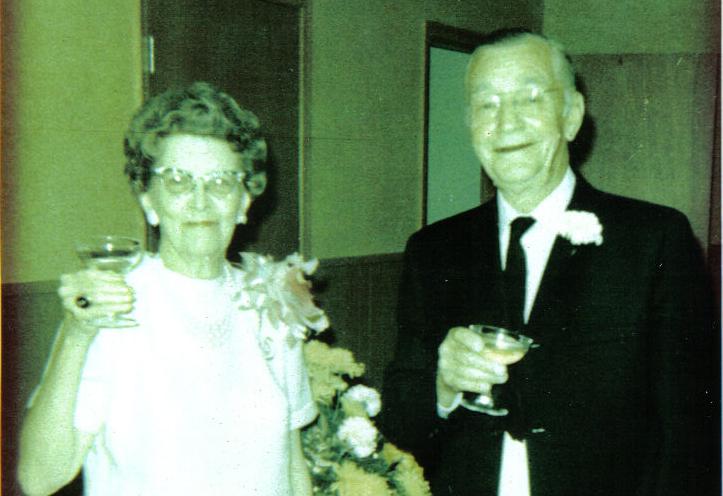
    I could be wrong, of course. As I was editing John’s essay last week, my wife saw the portrait of John and Bertha you see above and said, “What an angry looking man!” And I suppose if you didn’t grow up seeing your dad and your grandfather making that face, you might not see the twinkle in the eye and the approach of the subversive joke.

    Which is why it is so important to capture those feelings, intangible as they may be.

    1. Ruby Cole saves Herbert Callin Article from Nov 22, 1905 Argus-Leader (Sioux Falls, South Dakota) ↩︎
  • Thoughts From a “Heritage American”

    Long-time Mightier Acorns readers are probably familiar with some of the basic foundational concepts of genealogy and family history. You have probably seen references to “My Sixteen,” and if you have spent the time tracing your sixteen great-grandparents, you probably have a good understanding of who those sixteen people were and where their ancestors came from.

    Probably.

    And unless you or both of your parents were born in another country, the odds are that your family tree includes several generations of U.S. citizens – people who were born in the United States, educated in U.S. schools, fought in U.S. conflicts, and voted in U.S. elections. By any rational reckoning, if you have any of those kinds of roots here, you are an American1 with an American heritage.

    So when you see or hear news referencing “Heritage Americans,” you might not realize that the people using that term don’t mean you.

    What Does It Mean?

    I know people don’t like being assigned extra homework, but I encourage you to at least read the first part of “Are You a ‘Heritage American’?” from The Atlantic, written last October, for context. In it, the phrase is given some specific parameters that ought to trigger scepticism in any family historian:

    The United States faces a fundamental rift “between heritage Americans and the new political class,” Auron MacIntyre, a columnist for Blaze Media, argued. “Heritage Americans—what are those?” [podcaster Tucker] Carlson asked.

    “You could find their last names in the Civil War registry,” MacIntyre explained. This ancestry matters, he said, because America is not “a collection of abstract things agreed to in some social contract.” It is a specific set of people who embody an “Anglo-Protestant spirit” and “have a tie to history and to the land.”

    For now, I’ll set aside the fact that the U.S. Constitution is being dismissed as “some social contract” here. But as someone who has spent a lot of time and effort going through “the Civil War registry” (which is not a single, simple thing, actually), this framing raises several objections. How many of one’s surnames does one need to find to qualify? Do maternal lines count? What about the German-Protestant spirit, or the many Catholic and Jewish families who fought in the Civil War? Why the Civil War? Why not the Second World War or the Revolution, if we’re arbitrarily choosing a watershed time period?

    Perhaps I’m giving people like MacIntyre too much credit for knowing our history, but the Civil War (1861-1865) seems to have been chosen precisely because it sits in a place in U.S. history just before the railroads united the continental coasts and the growth of the Midwest began to turn us into a world power, instead of the remote backwater we had been during our first four score and seven years. It is recent enough to have better records, and it captured a moment in time after the U.S. absorbed nearly 100,000 Hispanic residents of Texas in 1845, but before immigration from Eastern Europe began to swell, leading to the need for places like Ellis Island (which opened in 1892).

    Choosing the Civil War instead of the Revolution, or the descendants of the Mayflower, means that more people can more easily claim to share this heritage. Choosing the Civil War instead of the First or Second World Wars means it is easier to exclude all of the Black Americans who gained suffrage and fought in those wars, and dodges the uncomfortable fact that two-thirds of the Japanese people the U.S. put into concentration camps during WWII were, in fact, American citizens.

    In other words, MacIntyre’s definition of Heritage American is obviously designed to only include specific people, and while that definition claims to “have a tie to history,” it ignores massive numbers of people who historically should be included. Since he doesn’t explicitly say he means “white people” (let alone define that concept), he can accuse anyone calling him out for his obvious racism of “bringing race into it” and pretend to be a victim.

    All of this is designed to exploit people’s biases to create out-groups that don’t belong, and you don’t have to be a student of history to know where that leads.

    What Am I?

    By MacIntyre’s definition, I absolutely qualify as a “Heritage American.” Every one of My Sixteen was born in the U.S., and only one of them was born to immigrant parents – Emil Carl Adolph Frey, whose father came to the U.S. in time to serve in the U.S. Army during the Mexican War and the Civil War. Every one of their sixteen surnames appears in “the Civil War registry” – most on the Union side. And while the “Anglo” prefix probably applies to only 11 of the 16, they were certainly all members of Protestant faiths.

    That said, this definition of “heritage” doesn’t include all of my family.

    I have two cousins who married women whose parents were interned in those Japanese concentration camps.

    I have cousins who found their way to the California-Mexico border and married Mexican citizens and/or members of indigenous American groups.

    My wife’s family includes several Swedish, Danish, and Norwegian immigrants who came over after the Civil War.

    I don’t need to have a provable family connection to understand that my Black cousins have as much right to be here as I do, or that my Native American cousins have every right to laugh a fool like MacIntyre back to Scotland for setting his parameters where he does.

    Perhaps you object to my characterization of MacIntyre’s idea as “foolish”? If so, then you and MacIntyre are definitely not alone in holding onto the idea that certain groups belong and others don’t. Benjamin Franklin wrote this about the German-speaking settlers in Pennsylvania, after he began serving in the Pennsylvania legislative assembly:

    “Few of their children in the country learn English; they import many books from Germany… The signs in our streets have inscriptions in both languages, and in some places only German. They begin of late to make all their bonds and other legal writings in their own language, which (though I think it ought not to be) are allowed good in our courts, where the German business so increases that there is continual need of interpreters; and I suppose in a few years they will also be necessary in the Assembly, to tell one half of our legislators what the other half say.”

    In other places, he wrote of the impossibility of the two cultures mixing, and contrasted the German standards of beauty for their wives against those of the English in terms which, if he were saying them about specific ethnic groups today, would have likely scuttled his political career.

    But unlike our modern champions of “Heritage America,” Ben Franklin went on to articulate the fundamental idea of unity between the colonies that allowed the Continental Army and Congress to force the break with Britain and found the United States. He was proven wrong about the future he predicted. His forecast of an untenable, unbridgeable split between English and German speakers clearly did not come to pass, as evidenced by my Witter, Piper (Pfeiffer), Huff, Cline, Shriver, and Opp ancestors.

    The lesson I take from this is that arguments warning of seemingly permanent, trending, and eternally intolerable differences between groups of people should not be treated with the weight that people give them. They are specious arguments that assume people aren’t capable of growing, changing, or setting aside their differences to come together for their common good when necessary.

    Or, to put it another way, the words we use to identify ourselves are always just words. When it comes to how we live and how we treat each other as neighbors, words aren’t what matter. Boring, everyday action matters.

    Being Boring Makes Us Great

    There is a seemingly unavoidable bias in the study of history towards emphasizing wars and conflicts. Even if your ancestors didn’t fight in a particular war, their lives were probably shaped around it. (Why do you think so many of those immigrants came to North America during the wars and upheavals throughout Europe?) When people talk about what their culture means and what is important to their identity, they often point to Great Deeds (in battle) done by people (usually men) who looked like them to define that identity.

    That’s because War and Heroes make exciting narratives.

    But when I study my family history, I find that the wars and the disruptions aren’t the part of the story that matters. What matters is that when the four or eight years of war were over, the soldiers went home and raised their families. They, along with their wives and other members who get erased from “the registry,” built their communities. They invested their time and energy into growing food, building houses, and schools. And they did that for countless boring years on end.

    I often think about the words Lin-Manuel Miranda had George Washington say to Alexander Hamilton:

    “Dying is easy, son, living is harder.”

    The truly important things, the things that make a living and make us good neighbors and strong families, are not done on a battlefield. They’re done in the kitchen or in the daily grind of existence. The things that make a common culture are things like good food and showing up for each other in times of crisis. And they include putting up with people you may not like very much, for whatever reason.

    As far as I’m concerned, if you or your parents came to live near where I am, built a life, learned a second (or third) language, and are willing to put up with the extra burdens carried by people who are “not from here,” you belong here as much as I do.

    I learned from studying my family history and Benjamin Franklin’s mistake. Our differences may make it impossible for us to see it now, but I am confident that being patient with each other and making it possible to do the boring things necessary for living is better for us all than creating unnecessary divisions that keep us apart.

    After all, we’re all cousins if you can go back far enough.

    1. I think it’s worth pointing out that the U.S. is only a part of America – as much as that fact may anger some of the people mentioned in this post. ↩︎
  • Ahnentafel #16: John Quincy Callin (1879-1956)

    John Q Callin was the second son of John and Amanda Callin. His father was a local Civil War hero, and his older brother was Byron Herbert, the colorful character we read about in “Prof’s Progeny.”

    When John graduated from Bowling Green High School in May 1900, his commencement program says he gave an Oration titled Unnoticed Heroes, suggesting that he felt he had a lot to live up to, but also felt confident he was doing his best. Being five years younger than Byron, John was often overshadowed by his brother’s accomplishments. He was also six years older than Emma, their sister, born in 1885, and 11 years older than the youngest of their three younger brothers, Prentice, Welles, and Ray, and after Byron left home for his adventures, John would have been the “older brother” they looked up to.

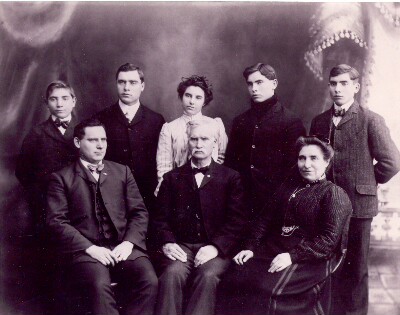
    from the left (standing): Ray, John Q., Emma, Welles, Prentice; (seated): Byron, John H., Amanda

    A First Marriage

    John Q. married Bertha Cramer in 1906, and their daughter, Yvonne, was born in May of 1907. They had two sons: John Norman, in 1912, and Robert (my grandpa Bob), in 1920. They stayed in Fostoria that whole time, presumably supported by John’s teaching. As far as our family knew, that was the whole story.

    But five years before John married Bertha, he married Clara (Williams) Miller – a teacher from Dayton. With a common name like “John” one might be tempted to dismiss this as someone else’s record, but “John Q.” with parents J.H. Callin and Amanda Walker is a bit more precise:

    “Ohio, County Marriages, 1789-2016”, FamilySearch, Entry for John Q. Callin and Clara M. Miller, 10 Aug 1901.

    Clara Myrtle Williams was born in 1872 and married William George Miller in 1890; they had two daughters, Mabel and Ima, and all appeared in New Haven, Huron County, Ohio, in 1900. Between that census, taken on 19 June 1900, and this marriage record dated in the summer months of 1901, it’s possible that John and Clara met during the 1900-1901 school term. I don’t have divorce records, so I don’t know whether Clara and George were already divorced, and I don’t know how long she and John were married.

    What we do know is that by 1906, John was married to Bertha, and by 1910, Clara and Ima were living with Clara’s mother, Harriet. So we are left with several questions that will probably never be answered.

    The First World War

    After Congress passed the declaration that entered the U.S. into World War I in April 1917, 2.8 million men were drafted into the Army. John and Prentice seem to have enlisted (or at least registered for the draft), though it isn’t clear whether they were in the U.S. Army or an Ohio unit. John was registered for the draft in September 1918, living in Lorain, Ohio, where he sold insurance for Prudential; Prentice registered in 1917 as a farmer in Portage Township. They were a bit older than the average recruit – Prentice was 30, and John was 38. It doesn’t appear that they got far from home before hostilities ended in November 1918, which was surely welcome news to the rest of the family.

    John, left, and Prentice Callin – c. 1918

    Moving Away, and Back…and Away

    In 1920, John was still selling insurance with Prudential, but his older brother, Herbert (aka “Prof”), convinced him to take a job in upstate New York as a teacher. When John Q. and Bertha moved to Schenevus, New York (not far from Middlefield) around 1921, Bobby was about six months old. Yvonne was just entering high school at the time, and stayed in Ohio, where she lived with her grandparents, George and Alice Cramer; Norman probably went to New York with his parents.

    John taught there for a few years before moving back to Ohio. The family seemed to be well-regarded by their community, but I suspect they were unhappy being separated from their family. John Q. and Bertha had moved back to Fostoria from New York by 1930, but they soon decided to move down to Florida, once again following Prof’s lead. John tried his hand at building resort cottages around the growing town of Orlando, and they lived out their days in Winter Park.

    A Family Portrait

    Hales and Callins in Fostoria, about 1925.

    At some point, probably around the time John and Bertha returned to Ohio, they sat for this photo with Bertha’s family. My grandpa Bob is seated in the front, and Norman is on the right, wearing his necktie. John and Bertha appear to be standing on the left; George Cramer is wearing a bow tie and is seated left of Alice. Bertha’s half-sister, Mamie, and her husband, Harlan Richard, are behind Alice, but I don’t know whether Mamie is the lady in the dark dress with the white designs, or the younger lady wearing the dark scarf. The older boy kneeling with the dog on the left appears to be Harry Donald Hale (born 1904), so I would assume his parents, John Harrison Hale and Dora Brookman, are in this photo, too.

    The Truth About Florida Man

    I have a friend from Florida who often complains that when we see ridiculous news stories about “Florida Man,” the people behind the headlines are from other places. There may be something to this theory. My own Callin family, including John and Bertha, slowly began migrating to Florida. Older brother Prof. took his wife and newborn daughter there from their home near Reading, Pennsylvania; younger brother Ray took his wife and son, Glenn, there. Their descendants are there to this day – mostly staying out of the headlines, of course.

    After John and Bertha moved to the Orlando area, Yvonne and her daughter, Virginia, soon joined them. Young Bob dropped out of high school and joined the Army there in 1939, ending up in Arizona. Norman married Ruth Harpster in Florida, but after the war, he decided that Baltimore County, Maryland, was the place for him.

    The letters we have from John and Bertha to Bob and Nancy show us a glimpse of their life in Florida, building cottages in Winter Park, some twenty years before Walt Disney made the area a tourist destination. They complained of the usual health problems, doted on their little dogs, and stayed involved with their church, their daughter, and, as much as the distance would allow, their grandchildren.

    John was 76 years old when he died on 6 April 1956.

  • HAMP: Harmonizing with MyHeritage

    part of a series, “Harmonizing Across Multiple Platforms

    When I conceived of this HAMP series, one of the first sites I intended to talk about was MyHeritage (myheritage.com) – but I ended up putting the draft on the back burner because of changes in the genealogy landscape.

    Family Tree DNA (ftdna.com) announced in the summer of 2024 that it was replacing its in-house family tree builder with MyHeritage. In 2025, 23andMe went bankrupt, and since 23andMe and MyHeritage had partnered up a decade before (starting in 2014), that raised a lot of questions about the security of DNA data in the industry, and made me take a “wait and see” approach.

    Around the same time, WikiTree and FTDNA announced a partnership, too, which I wanted to see in action before I tried writing about any of these new developments.

    Now, it has been over a year, and while my Ancestry membership was paused, I took some time to tinker with MyHeritage and see what’s what.

    My Experience

    My site on MyHeritage is called “Mightier Acorns” (of course).

    An Ancestry membership gives you access to three times as many historical records as MyHeritage – 60 billion versus 20 billion. Where MyHeritage may have an edge is in access to European databases that Ancestry lacks. Of course, I am taking the word of others on that – I have not taken the plunge to try a full MyHeritage membership, yet.

    Memberships can cost half as much at MyHeritage, but if you watch for promotional discounts around holidays, you may be able to get an all-access membership at either site for a limited time.

    From the outside, some of the differences between the sites feel cosmetic; for example, Ancestry bought Find A Grave several years ago, and your hints and search results will include Find A Grave memorials. MyHeritage has integrated with BillionGraves, and will suggest results from their database.

    On the whole, I don’t see a benefit to using MyHeritage at their “free” level over Ancestry. They limit the size of your tree to 250 people, for one thing, and while I have been peppered with notifications that other people have “verified matches” to people in my tree, I can’t see or interact with those matches without paying for an upgrade.

    For me, for now, I’ve maxed out the 250 people I can have in hopes that someone searching for DNA matches might be able to find their way to me. But unless there is some compelling “killer app” that I’m missing out on, I don’t see the need to try the upgraded levels.

    YOUR Experience?

    I am certain that there are those among you who have had more experience with MyHeritage. Maybe you’ve blogged about it, or maybe you’ve just been dying for a chance to talk it up.

    Feel free to say so in the comments.

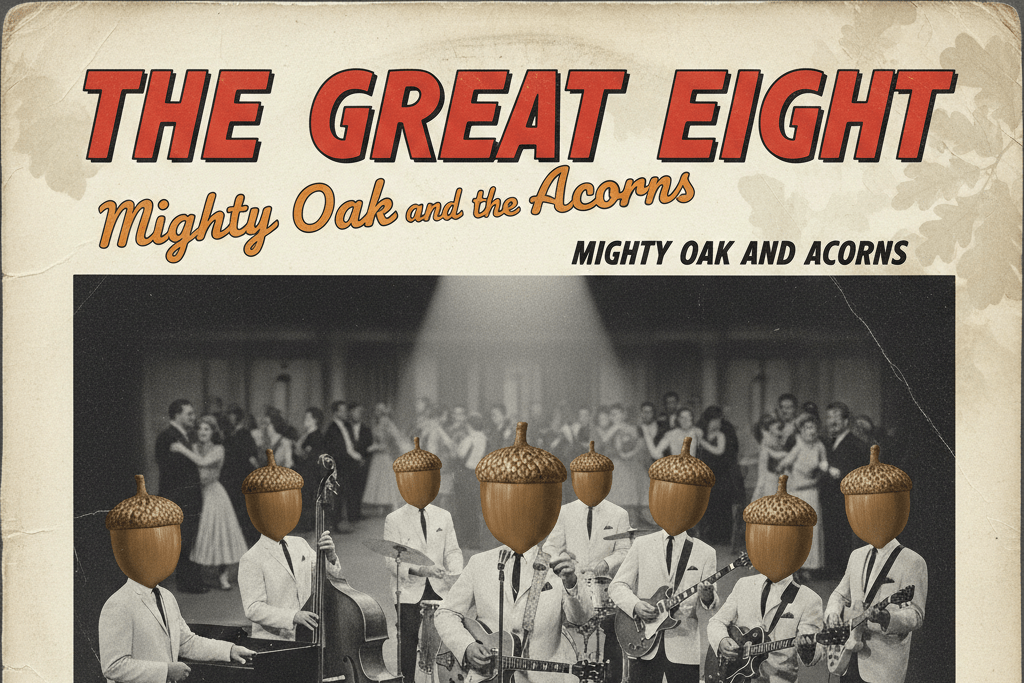
  • My Kids’ Great Eight: An Appraisal

    My kids have eight Great-Grandparents. That’s not unique – everybody does!

    But if you look at family trees as a generational benchmark, my kids fall mostly into “Generation Z” and their great-grands fall into what is known as “The Greatest Generation” – the people who fought back the Axis Powers in World War II.

    I find this interesting because their Great Eight were born within a relatively tight cluster of years, beginning in 1920 and ending in 1928, a trend which is statistically unlikely to continue as we go further back. They also came from a relatively small number of U.S. states: most from Iowa, two from Ohio, and one each from Minnesota, New Jersey, and Arizona.

    The G.I. Generation

    Three of the four Great-Grandfathers we’ve talked about (Bob Callin, Russ Clark, and Bud Holmquist) were born in 1920, with Bob the youngest (December), Bud born in September, and Russ the oldest, being born in March. The odd man out was Bob McCullough, who was born in 1927 and is the only one of the four who was too young to fight in World War II. (He served in the U.S. Army Air Corps in 1946 and 1947, and served a tour in the Korean Conflict.)

    Each of these men married someone slightly younger than themselves. My grandmothers, Nancy and Alberta, were both born in 1925; my wife’s grandmothers were both older than mine (Merilyn was born in 1923) and younger (June was born in 1928). Merilyn and June were both married at 19, while Alberta was nearly ancient (according to the way she told her story1) at 20, and Nancy was only 17!

    All eight of them came through the Great Depression, but here their individual experiences differed somewhat. Merilyn was the daughter of an Omaha-area businessman who owned a filling station and oil company, and she married Bud, the up-and-coming son of a Swedish immigrant. Bob Callin’s family also had some success with teaching and running businesses in Ohio before moving down to Florida to build cottages near Orlando. Bob McCullough and his eventual wife, June, came from families that worked on the railroads, and Alberta’s father was a New Jersey grocer, which meant they were probably shielded from the worst of the Depression. Nancy’s father and mother struggled in their early years, but ran a dairy and sold beef in Arizona during the 1930s. It was Russ Clark’s large family who may have been worst off during those years, and I do remember him often talking about the hard times his mother had feeding a dozen children.

    Politics and Religion

    While you can often find references in old local histories to people who identified with a particular political party, I get the impression that most people in this generation didn’t make their politics as central a part of their identity as people do today. Similarly, their religion wasn’t a matter of identity as much as it was a factor of how the community organized itself.

    I’ve talked before at some length about the fact that both of my grandfathers were ordained in the Southern Baptist tradition. Neither of them grew up in a Southern Baptist church, as far as I can tell. When Bob and Nancy met, Nancy attended the First Christian Church in Glendale (the full name of the denomination is “Christian Church (Disciples of Christ)”), where her mother was a charter member. Alberta’s family were Methodists, and many of the men on Russ’s maternal side, the Reynolds, were itinerant Baptist preachers, but Bert and Russ became Southern Baptists during the 1950s.

    Bob McCullough and June Shuffler were married at Our Savior’s Lutheran church in Council Bluffs, Iowa, and as far as I know, that’s the church they grew up in. In contrast, Bud Holmquist’s family was also Lutheran, but Merilyn’s family was Christian Scientist.

    All Families Great and Small

    Several major trends affected families between the generations of the Great Eight and their children. Public sanitation – like water treatment programs, public hygiene, and local vaccination efforts in some states – and industrialization after the Civil War meant that “farm families” did not have to have as many children to guarantee that some would survive. Fewer children died of childhood diseases, and as families moved to cities where the men found work in factories, they didn’t need large families to help with the family farm.

    Here is a table showing the number of children in each family for two generations, and the range of birthdates for those children. (In the “siblings” column, I counted the person along with their siblings, so Bob Callin and his two siblings give us three total.)

    The Great EightSiblings (span of birthdates)Children (span of birthdates)
    Bob Callin3 (1907-1920)2 (1943-1946)
    Nancy Witter2 (1921-1925)
    Russ Clark11 (1899-1920)3 (1947-1956)
    Alberta Tuttle2 (1920-1925)
    Bob McCullough9 (1908-1927)6 (1949-1967)
    June Shuffler2 (1926-1928)
    Bud Holmquist4 (1915-1923)2 (1945-1950)
    Merilyn Martin3 (1920-1928)
    Total36 (1899-1928)13 (1943-1967)

    I notice that except for Bud and Merilyn, who were “middle children” (Bud was 3rd of 4 siblings), everyone was the youngest in their family.

    Of the 36 children in the families of the Great Eight, only 4 died in infancy.

    Different Circles

    I never met either of my wife’s grandfathers, and only met her grandmothers a few times. Both sets of grandparents knew each other, but I don’t think they saw each other very often. Bob and June most likely met Merilyn at their children’s wedding in Council Bluffs, but since the McCulloughs lived in Minnesota, I doubt they interacted much beyond that. And Bud was in prison by then and had no contact with anyone after the mid-1960s, as far as I know.

    Russ and Bert did know Bob and Nancy, but despite all they had in common, I don’t think they spent much time together. Bob and Russ were both Southern Baptist ministers, but they were very different in how they thought about the world and how they practiced their faith. Both couples spent a lot of their time in RVs exploring the Southwestern United States, but for Bob and Nancy, this was more of a hobby, while Bert and Russ made their home in their campers and treated their travels as a calling.

    I find it interesting to think about how different these eight people were, and how unlikely and random it is that their children met each other and decided to have families of their own. As we continue this journey, I expect we will see examples of families who lived closer to each other and shared a lot more in common than the people in more recent generations do, even as the different family groups become more distant from each other as we go back in time.

    As we continue this journey, we will have to learn more about our history to understand the people we study. We will have to get to know them through the context of their time, use what we know about ourselves to imagine them living through events, and puzzle out what choices they made that led to us.

    Next week: we start with my “Great Eight” – the first half of my childrens’ Sixteen great-grandparents!

    1. see Grandma Bert’s Travelogue ↩︎

  • Those Who Remained III: The Campbells

    Picking up from last time: John Callin (1870-1835) and Elizabeth Simon (1780-1864) were born and married in Pennsylvania, according to The Callin Family History, published in 1911 by their grandson, George W. Callin (1846-1921). Anything George knew about his grandparents probably came from his father, William, or aunts and uncles who remained close enough to Ohio for him to meet them.

    Rainbows in a Mental Prism

    I’ve been poring over that 1911 Callin Family History (the “CFH”) for three decades, now. I’ve lamented for 30 years that George did not include any of his sources, and I spent the years 2015 and 2016 using my full Ancestry membership, FamilySearch.org, and old digitized local histories found on sites like the Internet Archive to find sources that could support or refute George’s information.

    Ann Callin‘s story in the CFH is pretty straightforward, and George seems to have been confident about the information he recorded:

    Record of Ann Callin Campbell, who was the 2nd daughter of John Callin, who was the 2nd son of James 1st.

    • Born Sept. 16,1806, died Mar. 18, 1889.
    • Married Henry Campbell Aug. 20, 1833.
    • To this union four children were born:
    • Cyrus, born Mar. 23 1834, died July 21, 1873, at Ashland, Ohio.
    • Harrison, born Dec. 8, 1837, lives at Tipton, Mo.
    • Elizabeth, born June 30, 1840, died at Ashland, O., Feb. 8, 1897, unmarried.
    • Francis, born Mar. 30, 1842, died Mar. 27, 1905.
    • Cornelia, born Oct. 13, 1843, died Mar. 13, 1849.

    Of course, confidence does not correlate to correctness. Stating “four children were born” and then listing five children undermines your credibility a little bit. Still, records seem to bear out most of that information – census records show those children in the household of Henry Campbell, a shoemaker in Milton Township, and various vital records support those dates and name the parents.

    So George Callin’s account mostly holds up, but there are small details that don’t add up. It reminds me of trying to drive into the morning sun with a cracked windshield – you can mostly see to drive, but there can sometimes be unexpected refractions, casting distracting rainbows across your vision.

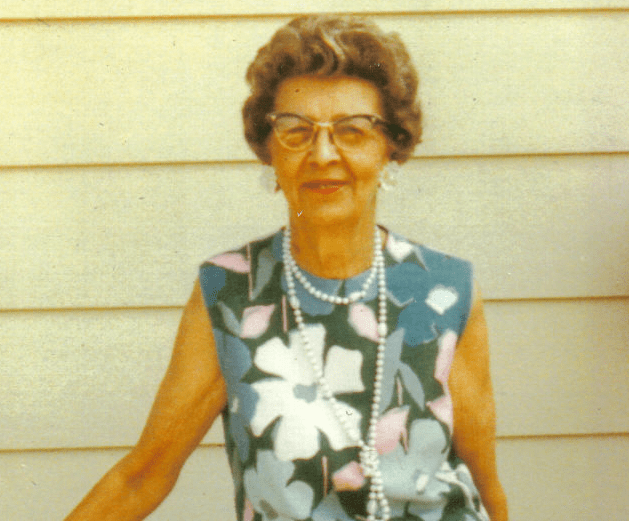
    Speaking of vision, we do have some photographic evidence for Ann:

    We don’t have any birth records (for Ann or any of her siblings), and we don’t have Ann and Henry’s marriage record (even though we do have records for her siblings and cousins who married before she did). We do have Census records from 1840-1870 that definitely fit the family George described, and we have Ann and Elizabeth living in Ashland in 1880.

    Within these records, there is an interesting trend in which Ann’s name transitions from plain “Ann” to “Mary Ann” and, in 1880, to “Mary A. Campbell.” What we do not see is a similar trend with Henry’s name – he is Henry on all the records I have found (sometimes misspelled as “Hery” or “Henrey”) – but that raises the question of which facts are facts, and which are phantom rainbows coming from the cracks in between.

    Just Who Was Henry Campbell?

    I don’t think this will be a shocking announcement, but “Henry Campbell” is an extremely common name. I’m not even sure that I can say whether or not this mention of a Henry Campbell in Milton Township in 1825 in the History of Ashland County, Ohio1 is the man who married Ann Callin:

    Chapter XXXIII. “The Pioneers of the Year 1825.”

    “…since we will not have space for a personal notice of each pioneer, at a later period, we have concluded to give the name of each voter and male citizen, so far as possible, at that date.”

    Milton township (range 17): includes [a long list, I selected these three to make my point] –

    • William Callin
    • Hugh Callin
    • Henry Campbell

    The records we have (census records and his headstone in Ashland Cemetery) tell us Henry was born in 1812. 1825 minus 1812 equals 13, and a voter in 1825 would have had to be at least 21, but the only William and Hugh Callin I know of who lived in Milton Township would have been Ann’s brother, William (b. 1813) and Hugh (b. 1817)…so I’m not sure what to make of this list of “1825 Pioneers”.

    The point I’m making here is that we have to be careful about making sure that the records we find match what we already know. We have to be more careful about making assumptions in this case, because there could be more than one Henry Campbell of unspecified age or parentage in play.

    The three Census records that name everyone in the household (1850, 1860, 1870) name the children who survived childhood, and the 1840 census counts the number of children we expect to see (two boys, one girl, of the right ages). The latter three records all give Henry’s occupation as a shoemaker. The first two (1840 and 1850) put their home in Milton Township (Richland County before 1846, Ashland County, after), and the latter two put their home in Ashland, which incorporated as a city in 1844.

    As a shoemaker in Ashland County, Henry may have mentored Thomas Jefferson Callin, the son of his wife’s cousin, Thomas. You might recall that Jeff Callin also lived in Milton Township and Ashland, and his father, Thomas, died when he was young. I find it likely that Henry may have stepped in as a father figure for the young man, maybe taking him on as an apprentice.

    But there are no clues in there to tell us who Henry’s own parents might be, or where in Pennsylvania he was born. I’ve done what I know how to do, and I added Henry to the Campbell Name Study. Perhaps someone will find him coming from another direction one day.

    Where the Children Remained

    Of the four children who survived to adulthood, Elizabeth remained unmarried her whole life and died in 1897 in Ashland. Frances (Campbell) Hoot married John B. Hoot in 1862, and they had nine children in Ashland, eventually moving to Mount Vernon in Knox County. Frances died in Columbus. The two boys, Cyrus and Harrison, grew up in Ashland, but many of their children ended up moving away from Ohio.

    Cyrus Campbell (1834-1872) fought for the Union in Missouri, and his younger son, Howard, was born in Nashville, Tennessee, in July 1864, probably during the Battle of Nashville. Cyrus left his wife, Ursulla, to raise his two sons when he died in 1872 or 1873, and she remarried and lived with her second husband, Robert Sutton, in Ohio. Elder son, Alden, became a farmer in Illinois, raising a son and two daughters. Howard moved out of Ohio and became a farm hand in Texas, eventually marrying his boss’s daughter and raising eight children.

    Harrison Campbell (1837-1924) enlisted on 15 Sep 1861 and mustered in as a private with Company I, New York 59th Infantry Regiment on 19 Oct 1861. After returning from the Civil War, he married Catherine Hoot, a half-sister of John Bently Hoot, who married Harrison’s sister, Frances. They lived in Missouri, where most of their children were born, and farmed until about 1914. By 1920, Harrison and Catherine had moved to Forest Grove, a small farm town about 25 miles west of Portland, Oregon.

    A CFH Post-Script

    When I embarked on my mission to update George’s CFH in 2015, the Campbell descendants were the first major research challenge I faced. I suspect now that George got the information for his book from Elizabeth Campbell before she died in 1897, or from Francis Hoot, who died in 1905.

    So when it came to chasing down records for the Campbell children and grandchildren who left Ohio, I found myself constantly losing track of people and then having to double back and double-check what I thought I knew, and what the records actually said.

    And I learned many lessons that would serve me well when I moved on to Ann’s sister, Eliza, and her many, many Ferguson descendants!

    1. Hill, George William; History of Ashland County, Ohio, published by Williams Bros, page 84 (Internet Archive). ↩︎
  • Ahnentafel #15: Merilyn Martin (1923-1997)

    My wife’s maternal grandmother was someone I met, but not someone I could say I knew. The few times we visited felt very formal, and I could tell that whenever we left, unspoken tensions would slowly drain out of my wife, along with stories of the ways she disappointed or offended Grandmother Martin when she was a child.

    When you don’t know someone, but you learn about them from those who did, the impressions you form become that person for you. And in the case of Merilyn Martin, everything I have been told came with a caveat not to repeat what I had learned, because it would displease her. Naturally, I learned that Displeasing Merilyn was a Very Bad Thing – but I’ll never know whether that is because of how she was or whether that was how those around her treated her.

    All I have are some facts, some memories, and a vague sense that she wouldn’t be happy to be the subject of an essay like this one. So be it.

    Growing Up In Between

    Merilyn Martin was born on 17 August 1923, the only daughter of Howard and Aletha, and a middle child between Douglas (1920-1997) and Charles (1928-2016). Doug passed on a 28-page memoir when he died, in which he described his childhood in some detail. But as he was three years older than Merilyn, who was five years older than Charles, he didn’t recall having much to do with them as children.

    According to Doug’s memoir:

    “My father was raised in the Methodist Chruch next door to where they lived and my mother was raised a Christian Scientist in New Albany, IN. before moving to Council Bluffs. I can’t remember either of them ever going inside a church of any kind after I was born. After I was able to drive a car, Dad would let me drive his car only to the Christian Science Sunday School if I would drive Merilyn and Charles. He finally found out that I only left Merilyn and Charles at Sunday School and then I drove all over town till it was time to pick them up. After that any driving of his car ended rather abruptly. That was the end of my church-going days too. Merilyn later was married in a joined the Lutheran Church in the Maplewood section of Omaha and Charles joined the Episcopal Church, I guess.”

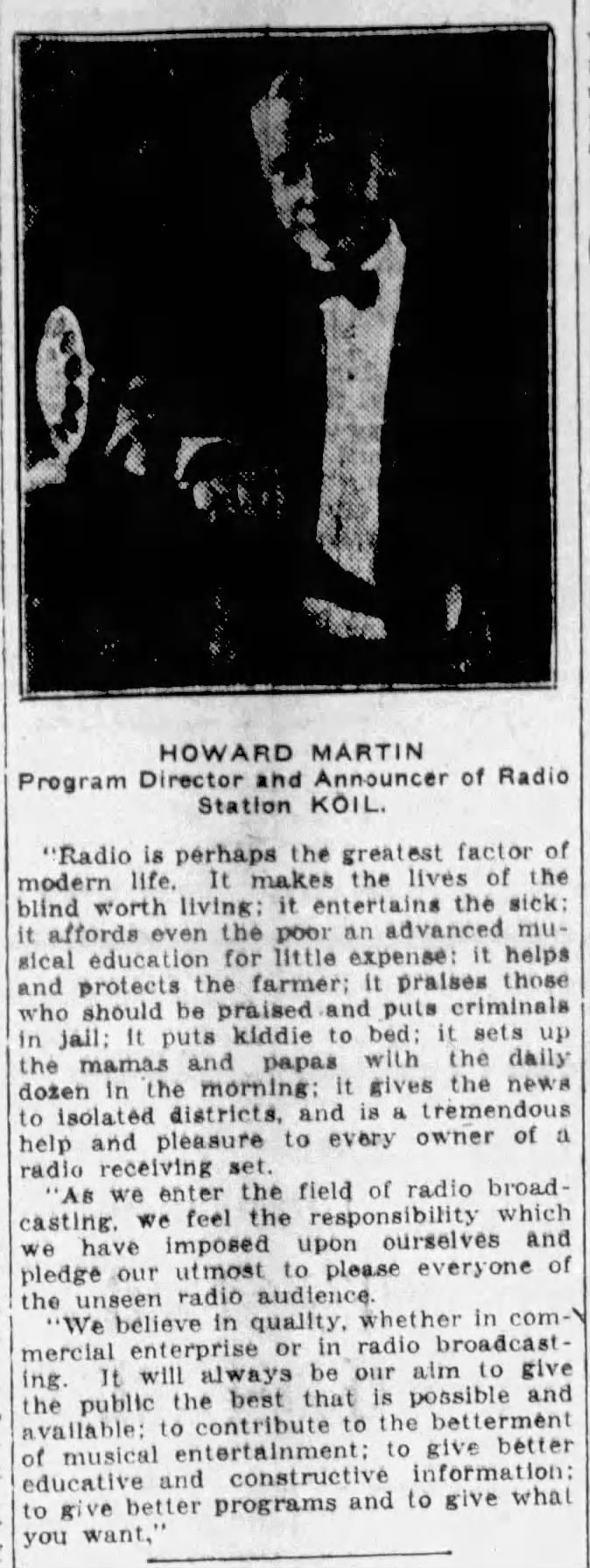
    The three Martin children seemed to be insulated from the Great Depression, as they were young enough not to be aware of most of the hardship, and their father’s oil business was successful enough to keep them fed and warm. He ran several filling stations, as well as the KOIL radio station, established in 1925, where Howard was an on-air personality and program director.

    And thus, Merilyn grew up between the Depression and the War, mostly shielded from both by the privilege of her well-to-do family. Then, as mentioned last week, Merilyn married Arvid Wesley “Bud” Holmquist in February 1943, and by 1950, they were living the dream of every post-war couple.

    Three Sides to Every Story

    From Merilyn’s point of view, she did nothing wrong, and I don’t intend to suggest that she did.

    She had what seems to have been a happy childhood, and when she got married, her husband seemed capable and willing to provide the same kind of lifestyle she’d always had. She was almost certainly part of the upper layer of the society she moved within. She was a classic Midwestern Lutheran mother, doting on two daughters during America’s post-war economic boom.

    And then he ruined everything.

    At least, as I first heard the story, that was how it felt.

    Just imagine being in your thirties, having never felt the touch of real hardship, and then, suddenly, seeing your husband’s name in all of the newspapers. The shame of having the end of your relationship published on the front pages instead of buried at the bottom of page 62 of the Omaha World Herald under the “Divorce Court” section1. The panic of realizing that your house, your clothes, your food, the health of your children, things that you’ve never really had to worry about before, are either gone or at risk.

    I certainly don’t blame Merilyn for Bud’s choices. She earned a lifetime of anger from what he did, and he earned a ticket out of her life. But… that divorce was in court in May 1960, half a year after his crime spree started, and a full year before he was caught and convicted.

    So, maybe there is something unresolved there that nobody ever required her to think about. Maybe their lifestyle was unsustainable, and maybe there were choices made and demands not met long before Bud Holmquist decided to start robbing people.

    There are almost certainly three sides to that story: hers, his, and the path that no one chose to take.

    The Happy Ending

    Obviously, as painful as the experience was, Merilyn and her daughters survived it. They grew up in Omaha, married, and have families of their own. By any fair measure, that’s a success.

    I don’t know when Merilyn remarried, but when I entered the story, I was introduced to her and her second husband, Todd Rossiter. Based on the photo I have, I would guess they were married by the 1970s.

    Todd and Merilyn Rossiter

    As I said when I began, I have the impression that Merilyn would not be happy for Bud’s crimes to be the center of her story. If I were in her place, I wouldn’t be happy about that, either. But the choices she made – the life she chose to live, and the way she chose to share it or not share it – left me with no other stories to put in its place. And so, while that’s the last thing she probably wanted to be remembered for, that’s the only thing I have to remember.

    Looking in from the outside, the best I can do is tell you that Merilyn (Martin) Holmquist Rossiter lived her life on her terms, she seemed to enjoy it, despite her hard times, and we are not owed more than that.

    1. Omaha World-Herald, Omaha, Nebraska, Fri, May 6, 1960, Page 62. ↩︎
  • Eating the Elephant

    An update on the Callan Name Study

    They say the only way to eat an elephant is “one bite at a time,” but there is also a pretty good story out there about the blind wise men trying to describe the elephant. That’s about where I am in this project.

    How to Describe an Elephant

    To do a comprehensive study of a surname, you have to cast a wide net and find out about all of the variants of that name, where they came from, and who made up the population of people using that surname.

    Most of the people I have found so far are Irish folks who spelled the name “Callan.” (“This elephant is like a wall,” said the monk who felt the elephant’s broad side.)

    There are also many Scottish records for people with several variations of the name, usually “Callan,” but also “Callen,” “Callin,” and “Callon.” (“This elephant is like the trunk of a tree,” said the monk who felt the elephant’s leg.)

    Of course, a large number of Callan folks emigrated to the Americas and Australia, using all of the possible spellings. (“This elephant is rather like a snake,” said the monk who felt the long, flexible trunk.)

    Naturally, the surname pops up in small numbers in Finland, Sweden, and Germany, usually as “Calen” or “Calin,” to keep us guessing. (“This elephant seems to be very like a rope,” said the monk who caught the tail.)

    There is also an African-American population that carries the name, but we must be mindful of the dark history of how and why they carry the name and, in some cases, the DNA. These cousins deserve some respect for the painful history they carry. (“This elephant is like a saber!” cried the monk who felt the hard, curved tusk.)

    This Elephant Is Like a Spreadsheet

    Actually, the elephant I’m compiling is a spreadsheet. You should be able to explore it at this link, if you’re interested.

    The first tab (bottom-left) is called “WikiTree links,” and I pulled the data from WikiTree using the One Name Trees app I talked about briefly in “Harmonizing With WikiTree.” I’ve begun the process of harmonizing by adding columns for FamilySearch profiles and Ancestry pages, and I’m adding links as I find them.

    The “Scotland pre-1855” tab may prove to be a failed experiment – I ran queries on Scotlands People (https://www.scotlandspeople.gov.uk/) for “Callan” with the “fuzzy search” parameter, and I ran it across the Church registers for births, marriages, and deaths, hoping that I could find a way to match records belonging to the same person using the spreadsheet’s sort and find functions. Despite nearly 2500 lines, I’ve barely been able to match anyone.

    I’ve also got the “Louth c. 1910” tab, for residents of County Louth who appeared in the 1901 and 1911 Ireland census records. Those for whom I’ve found WikiTree profiles are already in the “WikiTree links” tab, as well.

    And that last tab, “Early Americans,” has proven to be the most elusive, since “early” is in the eye of the beholder, and I haven’t found a good way to pull comprehensive data out of Ancestry.

    What I’ve Learned

    The most exciting discovery was the One Name Tree app, which gives me a pretty solid understanding of what is in WikiTree. As I match WikiTree and FamilySearch profiles, I should be able to start categorizing the WikiTree pages so I can take advantage of some of the Connectathon events and Projects that already exist and have a lot of participants.

    For example, I know there are several profiles connected to Asberry Piner Callen in Kentucky:

    Callen, Asberry Piner1833-10-001903-10-16LC37-YZBCallen-415Atwood, Kenton, Kentucky

    I’ve got links to an Ancestry profile, a FamilySearch profile, and a WikiTree profile here, so if I added Categories to the WikiTree page for the Kentucky Project that indicated which profiles “Need improvement” or “Need family profiles made,” that would help their project members find these pages that could use their attention. And, if they need sources, they may be able to find some already on the other linked pages.

    Another family I found using the One Name Tree app was centered on this man:

    Callen, Alexander1900-11-021982-01-00GTKG-M3BCallen-391Virginia, United States

    This is an African-American family, and so far, they don’t appear to be connected to the World Tree. This would be a good starting point for someone looking to help out with the US Black Heritage Project.

    How You Can Help

    If you have any experience running a Name Study, any advice would be helpful. I feel like there is a lot of preparation and organization left to be done before I will be comfortable reaching out to ask folks in overlapping projects for help, but that may be precisely what I should do!

    I still need to figure out how the work I’m doing can benefit the other, existing Name Studies I found:

    The Guild of One-Name Studies has a Callan project with about 50 names listed. And Stan Courtney, who manages the Callan DNA study on FTDNA, maintains a Callan – Earliest Known Ancestors database, both at that link and on Ancestry. Callan households in Louth gives a pretty cool overview of the available data.

    The important thing, I guess, is that there is progress, and I’m enjoying the work. And that is all I could really hope for.

  • Ahnentafel #14: Bud Holmquist (1920-1996)

    My wife’s maternal grandfather was many things: a wartime pilot, a suave businessman, and a notorious interstate stick-up man. He was handsome and charming, the son of Swedish immigrants, and until he was convicted and sent to prison, his was the kind of success story people remember from the 1950s.

    There is probably a lesson to be learned from that story.

    Growing Up in Lake Wobegon

    For some 30 years on public radio, Garrison Keillor would tell stories about a fictional “hometown, out there on the edge of the prairie,” ending each week by saying, “That’s the news from Lake Wobegon, where all the women are strong, all the men are good-looking, and all the children are above average.”

    Mahtomedi, Minnesota, where Bud Holmquist was born, sits about 20 minutes northeast of the state capital, St. Paul, and calls itself “A Very Large Town City.” It is about 10 times larger now than in 1940, so one has to wonder whether stories like Keillor’s Lake Wobegon tales might not have resonated on the shores of White Bear Lake, where the Holmquists kept their home.

    Christmas in Mahtomedi – Bud is in the center/back.

    Bud’s full name was Arvid Wesley Holmquist, and he was born in Mahtomedi on 6 September 1920. He grew up with two older sisters, Ruth and Lillian, and a younger sister, Dorothy. Their father, Arvid William, was a custodian in the public schools. He had immigrated from Sweden when he was in his late twenties, and became a naturalized citizen in 1921.

    As Bud was William’s only son, we can imagine how proud he was when the young man landed an engineering job, which sent him to Iran for a year in 1942. When he came back from his year abroad, Bud married Merilyn Martin, the daughter of Howard Martin, a prominent businessman in Omaha. They were married in February 1943, and soon after, Bud was inducted into the air corps at Fort Snelling.1

    Down In Flames

    By all accounts, Bud enjoyed the adventure of being a pilot in the war. Afterward, he came home with prospects. He went to work for his father-in-law and was a successful salesman. He and Merilyn had two daughters, and by the end of 1950, one might think he had attained the American Dream.

    The story, as it was handed down to me, is that his girls wanted for nothing. Pretty dresses, expensive toys, including a child-sized car with a working gasoline motor for them to drive around! But by 1959, something gave way. In May 1961, newspapers across the Midwest reported the capture of the “Executive Bandit”2:

    Omaha (AP)–Arvid Wesley Holmquist, a 40-year-old salesman who told police he gave up a $13,000 a year job [about $144,796.77 in 2026] to become a bandit, was arrested Sunday as he sipped coffee in an Omaha restaurant.

    Police said he made statements about a dozen holdups in 7 states, including one Lincoln stickup. The loot ranged from $45 to $26,000. The biggest take, Holmquist told police, was in his first holdup at the Younkers-Davidson Department Store in Sioux City, Iowa [on September 29, 1959].

    The victims of the robberies listed had described the bandit as a calm, executive type.

    He said his formula was to wear a business suit and walk slowly, adding: “I always dressed good. If you want to be a stickup man, don’t wear a black leather jacket.”

    Referring to his formula, he said in the Sioux City holdup, he was walking out of the store with most of the day’s receipts in a bulging satchel and an employee opened the door for him.

    Bud admitted to about a dozen holdups he committed in seven states in 1960 and 1961:

    • Kilpatrick’s Store, Omaha, April 21, 1960, $1,900
    • Interstate Finance Co., Omaha, Aug. 1, 1960, $1,000
    • American Loan Co., Omaha, Sept. 19, 1960, about $100
    • Murphy Finance Co., Lincoln, Aug. 23, 1960, $1,700
    • Murphy Finance Co., Wichita, Kan., fall 1960, $200
    • Interstate Finance Co., North Kansas City, fall 1960, $200
    • Dial Finance Co., St. Joseph, Mo., April 1961, $850
    • A finance company in Rock Island, Ill., in the fall of 1960
    • A finance company in Phoenix, Ariz., in March 1961

    In total, Bud stole about $35,000, equivalent to about $389,837 today. “Asked what he did with the money, he replied, ‘I was trying to drown everything that happened.’ He added that he bought some race horses and did ‘quite a bit’ of betting.”

    I had always been told that his arrest ended his marriage, but the newspapers suggest that things happened the other way around. According to Bud, he was working as a salesman for an Oshkosh, Wis., clothing firm when he “got disgusted…. I gave up working…There was a divorce coming up. I didn’t care what happened and had a rather negative attitude at the time.” By the time he was arrested, he was living in a residential hotel, and said, “I was almost hoping I’d get caught and get it over with.” Detectives said he had $20.01 on his person when he was arrested.

    Paying the Cost

    Bud pleaded guilty to all of his crimes. He was sentenced to nine years by the Douglas County District Court on 25 May 1961, and the Lancaster County District Court sentenced him to another 11 years on 12 September. In 1965, newspapers reported that he was being considered for “commutation to detainer,” which meant that he could be given clemency in Nebraska, only to answer to other jurisdictions. Authorities wanted him in Phoenix, Arizona, and Wichita, Kansas.

    It’s hard to know when he was released from prison, but there is a 1974 divorce record for an Arvid W. Holmquist in Orange County, California, that might be him. Clark County, Nevada, records from 1979 and 1982 suggest that he was married to Hallie Harp for three years, and public records show him at a Las Vegas address in 1991.

    Bud Holmquist died in Las Vegas on 10 August 1996. He is buried in Union Cemetery in Maplewood, Ramsey County, Minnesota.

    As far as I know, he had no contact with his family, even though his sisters, Lil and Dot, outlived him until 2004 and 2008, respectively. I do know that his wife and daughters never forgave him.

    But that isn’t my story to tell.

    1. The Daily Nonpareil, Council Bluffs, Iowa; Sun, Feb 14, 1943, Page 11. ↩︎
    2. Sioux City Journal, Sioux City, Iowa; Monday, May 15, 1961, Page:1. ↩︎

  • HAMP: Harmonizing with WikiTree

    part of a series, “Harmonizing Across Multiple Platforms

    When we last talked about harmonizing our research efforts using multiple online platforms, I said I would talk next about “why-to” use WikiTree. That was last summer, and since then, WikiTree and Family Tree DNA (ftdna.com) have partnered up so that users can connect their WikiTree accounts to their FTDNA accounts more easily, and I’ve been waiting to see how that works.

    I’m still not sure what I have to say about the FTDNA-WikiTree partnership, but a few months have passed, so let’s take a look at some of the other ways WikiTree might fit into your overall strategy of guiding and preserving your family history research.

    Why It Is Free

    WikiTree is 100% free to sign up for and to use. As their internal Help pages explain, they use ads that display to non-members to support the costs of running the platform, and they rely on volunteers to develop data analysis apps, to mentor each other, or to run the various Projects that seek to improve the information on the platform.

    Unlike other free services we’ve already talked about (Find-a-Grave and FamilySearch.org) WikiTree does not give you direct access to any records. What you do get is access to two halves of a single, collaborative family tree: the “wiki” and the “g2g” (short for “Genealogist to Genealogist”).

    G2G is a forum for asking questions, finding help, volunteering to help, and coordinating on Projects. When you first sign up for a WikiTree account, you should receive emails with instructions for finding the introductory tutorials on using the forum and the wiki.

    When you reach out for help with a question, or guidance on how to do something, just keep in mind that with an all-volunteer workforce, it can take some time to get a response – and sometimes the response will be “I don’t know that, either – let me help you figure it out.” In this case, the “cost” of a free platform is that you need to be a little more patient and be prepared to deal with Other People.

    One World Tree

    The “killer app” at the heart of WikiTree is the wiki – a single tree for all users, highly flexible, and editable by everyone. (We talked before about how scary “editable by everyone” can be in the first HAMP post.) Like the World Tree on FamilySearch, the goal is to have a single page (a “profile”) for every individual, instead of countless separate trees with conflicting or unsupported information. Privacy rules are in place to protect the profiles of living people and the recently deceased.

    Some people find the wiki markup language and editing features easy; others, less so. This is where the G2G forum and various Projects can come in handy: that’s where you can ask questions and learn.

    And there is a LOT to learn. But the cornerstone is the “Biography” section of each profile. That is where you should be putting your standard narrative paragraphs and source citations. When you sign up for your free account, you get your own profile, which is an ideal place to practice. Since you control your own privacy settings, no one has to see how many times you have to rewrite your own story, or how many tries it takes for you to learn how to format your citations!

    Once you have the basics of editing a profile down, you can move on to either finding or creating profiles for your family. Building out “My Sixteen” was an early goal for me. That meant creating or linking to 31 profiles (me, my “Great 28,” plus “My Sixteen”), and usually, by the time you’ve done that, you should have at least one ancestor linked to an existing WikiTree profile – connecting you to that One World Tree.

    Welcome to the Rabbit Hole

    From there, you can really start to take advantage of some of the interesting data analysis apps developed by enthusiasts around the world.

    This is probably the app most people have come in contact with – plug in your profile handle (mine is “Callin-50”) and any other profile on WikiTree, and the app will figure out how you are connected to each other. If you sign up for the weekly email from WikiTree, or for Watchlist notifications, they will include links based on a theme of the week (themes like “Famous TV stars” or “Founding Fathers’), but you can try this any time on the Connection Finder page.

    I’m only 20 degrees from Kevin Bacon – but I’m no movie star!

    Probably the most useful app – once installed into your web browser, you can use it to create an inline citation for (almost) any source record you care to put in a biography. For example, if you see a source in FamilySearch, follow the link to the record page, create the citation, and paste it into your biography. For most sources on free sites, it should create links to the record and, in most cases, to the image of the record, making your WikiTree page more useful.

    Note: you always want to proofread the output of any app like this. You may have formatting preferences different from the app developers, or you may need to add details (like page numbers) that the app can miss.

    • One Name Trees

    This one is fun for the data analysis piece of your favorite One Name Study.

    You can find it by clicking the pulldown menu from your name on your profile page, opening the Tree Apps page, and clicking the pulldown in the “Tree Apps” box – “ONE NAME TREES” is alphabetically sorted, about halfway down the list.

    I needed a way to access all of the profiles for the surname variations in the Callan Name Study, and this app allowed me to export them to a spreadsheet (using the “Sheet” button).

    The Magic of Harmonizing

    As with all of these family history tools, your mileage may vary depending on what you are trying to accomplish. WikiTree has become, for me, an End Goal – once I have done what I can to pull together the evidence to support what the Biographies and Profile connections claim, WikiTree is where the “finished” work resides.

    I see it as the anchor point for what I can do with all of the other sites and tools.

    And, of course, for people like us, it can be a lot of fun!